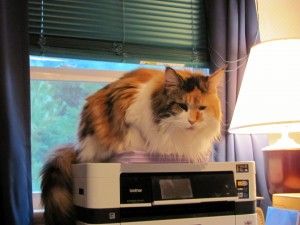
Reminders and a Call for Assistance

This is in the nature of a catch-up and reminder post.

A.  Order your signed and/or personalized copy of Alliance of Equals:  Uncle Hugo’s Science Fiction Bookstore in Minneapolis is now accepting pre-orders for signed and/or personalized copies of Lee and Miller’s 19th Liaden Universe® novel, Alliance of Equals, which will be published in July.  There is a deadline for pre-ordering personalized books (where “personalized” means the authors, in addition to their signatures, write something specifically requested by the person buying the book).  That deadline is June 1Here’s your link.

B. Liaden Universe® Store at OffWorld Design:  Coffee mugs, denim shirts, t-shirts, polos!  New colors and items have been added, just in time for spring!  Here’s your link.

C. The eARC of Alliance of Equals is now on sale at Baen.com.  Here’s your link.

D. For those who have read Alliance and want to talk about it, there’s a spoiler discussion here.

Author Requests Assistance

Related to Point Number C, above:   The page proofs for Alliance of Equals landed here at the Confusion Factory.  It is apparent that the original manuscript was, ah, copy-edited with a very light hand.  So!  If you have the eARC, and notice errors, or things that seem like errors, please drop me a note at rolanniATkorvalDOTcom.  I will need chapter, page number and some of the text surrounding the error, so that I can find it.  Everyone assisting with this project will be thanked on the Acknowledgements Page in Alliance.  This is a matter of some little urgency, since the corrected pages need to be back at Baen Galactic Headquarters on April 12, which means they must leave Maine no later than April 11.

In other news, and in addition to proofing Alliance, Steve and I are still working on The Gathering Edge, which is due realsoonnow, and!  we have a short story due on May 15.

We’ll be writer guests of honor at RavenCon, in Williamsburg, Virginia, April 29-May 1, which con kicks off a summer of travel, including attending the Maine Democratic Convention as delegates for our town, the weekend we return from RavenCon; attending BaltiCon as returning guests of honor for their Fiftieth Anniversary Bash; doing a mini-book tour in support of Alliance, and! traveling to Wichita, and Kansas City.

Our full schedule, insofar as it is presently known, can be found here.

Thanks for listening, for reading, and for all that you do.  Here, have a picture of Trooper and Belle, ignoring each other.

Mutual Ignoring Society Mar 29 2016

Reading the page proofs

So, I’m doodling along with the page proofs for Alliance of Equals, which has a nice, long turnaround time of three weeks from time of receipt.  For which I am truly grateful, because that gives us time to Pay Really Good Attention to the script and not have to Push On! despite one’s brain hurting, and eyes crossing, because Deadline.

So far (I’ve just finished page 79, or seven chapters, or 22%), it’s been pretty clean, but there have been some really strange copy editing decisions made, which has prompted me to keep the submission copy of Alliance open on the screen, so I can double-check stuff, and put it back the way it ought to be, when needed.

One of the strangest decisions was the treatment of master trader in a situation where Shan is trying to decide from which melant’i he ought to approach a knotty social problem.  Ought he to come the father? Or ought he speak as master trader?

The copy editor in the above case decided to put master trader in. . .quotes.  Mind you, they didn’t likewise put father in quotes, which would have been just as wrong but at least consistent.  But. . .

Shan does not think of himself as “master trader.”  Putting master trader in quotes in that particular instance Completely Negates melant’i, as we’ve built it and refined it over 19 novels and lots of short stories.  Shan thinks of himself as Shan.  Shan has various life roles assigned to him — father, master trader, master pilot, brother, lifemate, thodelm — and so on.  These roles, to a Liaden, are real, they are, in a peculiar and important way, living.  Liadens are, according to their own culture, not one, but many, and this is codified (as distinct from, say, US culture, where we are many, but we pretend that we’re not).

Having Shan think of the “master trader” in the instance above is so wrong, that I actually felt a little nauseous, seeing it there.

It’s fixed now, but — phew.  Close one.

Moving onward now to making some spaghetti sauce — we have fresh tomatoes, we have chopped fresh garlic, we have — wait for it — mushrooms (mmmmm, mushrooms).  Man, this is going to be primo spaghetti sauce.

After lunch, it’s back to The Gathering Edge.

How’s your weekend going?

Camden harbor Mar 20 2016

Oh, Romeo — yeah; you know, I used to have a scene with him

Being a writer is a lot like being a Liaden Scout, in the sense that both involve long stretches of boredom punctuated by brief moments of terror.  The Scouts have it over writers in the mucking about in the mud part; and in general writers have the advantage in felines.  But, otherwise, almost exactly the same.

We here at the Cat Farm have just entered a period of High Energy, if not outright terror.  Of course, we have a book due on April 15, and into that already charged situation was introduced the page proofs for the mass market edition of Dragon in Exile, with a return deadline (originally) of Monday, March 21, which, because Central Maine and FedEx, would have given us 2.5 days to proof-and-mark-up because the last FedEx pickup of the week is Friday at 4:00 pm.  We did negotiate a one-day delivery delay, which gained us the weekend to work, so!  Deadline now Tuesday, March 22.

Steve is taking the lead on the page proofs, and I’ll do spot checks after he’s done, so it only seemed fair, when the copy edits for our Alien Artifacts short story, “Shame the Devil,” came in, on the evening of March 15, for me to take them.

We’re still expecting the page proofs for Alliance of Equals to land between now and the hand-in date for The Gathering Edge.  That will be a more intense experience than going over the proofs now in hand.

Into the roil of sudden busyness, was tossed the info (like chum to the sharks, says the backbrain.  O, backbrain.) that Baen will be destroying the remaining hardcover copies of Duainfey and Longeye still in their warehouse, which is sad, but inevitable, and also!  that we should keep a Sharp Eye Out for paper ARCS of Alliance of Equals.

And, I have a call in to my doctor because of this stupid knee injury, which, despite being pampered ridiculously, still doesn’t seem to be healing like it should.

Wheee….

So, anyway, that.  We may be just a tad thin on the internet for the next few weeks.

I have a question for my colleagues who read here, based on a tweet I saw this morning, and I’m. . .intrigued and/or baffled.

How many of you count speaking roles in your latest WiP, to make sure you have gender parity?  (Full disclosure:  It would never have occurred to me to do this.  I don’t even count the cats in the story.)

And now — work awaits!

Everybody have a good Wednesday.

Here, have a picture of Sprite atop Mount Page Proofs.

Our assistant will be reading the page proofs Mar 15 2016

Oops!  Today’s blog title brought to you by Dire Straits, “Romeo and Juliet.”  Here’s your link.

This, and all the world

The question is:  how much world building do you do before starting a new series or tangent? I’m working on my first novel and keep finding I have to backtrack to explain assumptions.

There are a couple of things going on in this question, so I’ll deal with the easiest one first:  It’s Perfectly OK to have to go back and fix/add stuff in/to your story.  We all do it.  We all get stuff wrong in the first draft.  That’s why most of us (I have had conversations with writers who say they write perfectly and never redraft.  Perhaps they do.) do multiple, or rolling, drafts.

As to how much world building I/we do before starting a new series…my first inclination is to say, “None; the characters tell me what I need to know, when I need to know it.”

While that’s true, it’s probably not true enough.  There are certain basic decisions you need to make before you start writing a story.

You should know what kind of story you’re writing:  romance, science fiction, fantasy, mystery, literary, &c, &c.  Knowing your genre will narrow what kind of world you’re allowed to play in.  Yes, there are crossovers.  The Liaden stories cross genres six ways from Thursday, but they are rooted in the traditions of science fiction.

Now, this business with the characters telling me/us what we need to know?  That’s true.  But the reason it’s true is that Steve and I tend to “meet” the characters who will be living in any particular story first.  That’s How We Do It.  Other writers think about the world/society first, and then they think about what kind of people would live in that world, and what kind of trouble they’d get into, what their assumptions are about their world, and if they’re right, wrong, or yes.

One of my favorite stories about world building comes from Janet Kagan.  She’d determined to write Hellspark, a book about language, and how it shapes society, thought, and prejudice; about what sentience looks like.  She worked hard on the kinesics of the various characters and cultures, kinesics being a plot-point, and she worked hard on her main character, Tocohl, who was a master linguist able to get around in multiple cultures because of her mastery of language and body language.  She wanted, particularly, for none of the cultures depicted in Hellspark to be “ours.”

And she was just about to hand the book in when she realized something.

In her book about alien kinesics?

The master linguist nodded.

Well, she tore the book apart to find and fix each of those incidences.  As one would, of course.

Now, that’s not the story of a failure — the error was caught in time.

But it is a cautionary tale to all of us, to think about what we’re doing in the world and society we’re building, and to question the easy answers that come from our assumptions and a lifetime of experience in what we like to call the real world.

Ask yourself:  What would a kid who lives in a closed environment where germs and dirt would cause a lot of problems, cuss by?  Might he use, mud, or dirt?  Supposing this closed environment that must be kept clean — how is that done?  Who does it?  What’s it called, the clean-up run?  It’s a basic task, keeping the ship clean, a survival task — is it therefore high-value?  Is the Garbage Man the ranking crewman, revered for keeping the ship spotless and the crew alive?  Or is Stinks a low-level task relegated to the junior-most?  It could go either way, right?  Just because we don’t happen to revere sanitation workers in so-called real life doesn’t mean that’s Natural Order.

Once you’ve made your choice — be consistent.  Pay attention.  Daydream about what your choices mean, down the story-road, what interesting developments might spring from them.

. . .but you can do most of that while you’re writing, see?  So long as you remember that going back and “fixing” things is a natural part of the process of storytelling.

. . .hope that helps.

Princess with sunshine and string Jan 8 2016

Good morning, Internets!

I just realized that the story we *ought* to be telling, that most accurately reflects How We Succeed at Art, is *not* the story of the Special Child who uses the adversity of Tradition to snatch his gift, whole, from the hands of their elders, but the story of the Child who Trades Her Youth For A Gift.
 
It’s funny, that the first story is thought to be uplifting, *true* and one that we therefore write and tell *often*, while the second story, which *IS* true, is, when it’s told at all, is narrated as a Warning, and the Trader Child as a fool.
 
Of course, it could be that those two narratives are the same — obverse and reverse.
Discuss.
Sleepy Belle Dec 6 2015

The writer at work

So, this is where I’ll be today — at the bookshelf standing desk overlooking the foggy, foggy trees, going through the Threads — each of those folders is a thread — combining clean-up with lexicon-building, and also identifying snap-on points.

Why, yes, that is quite a bit to have to hold in one’s head at once.  This is why I’ve turned off FB and Twitter and all the various news thingies that are so shiny and distractive.

Yes, the window is open. Yes, I still live in Maine.  It’s like 41F/5C out there this morning, and looking to rocket into the 50s/10s.

See you later.

Standing up for work Dec 11 2015

How to win at Patreon

So, some background on this.  Earlier in the year, after having resisted suggestions that we do so for Some Time, Steve and I set up a Patreon account, and waited to see What Would Happen.  We were astonished and pleased at the willingness of people to sign up as Patrons of Liad, but we were surprised by another thing that went along with our account and our patrons.

Though the level of support was gratifying to us, personally, what we hadn’t understood was that we — Lee and Miller — were among the higher-“paid” creators using Patreon.  We’re certainly not in the same league as Jeph Jacques or Amanda Palmer, but, apparently, for writers — and especially for writers who aren’t giving our supporters any special goodies, except for the Warm, Fuzzy Feeling of helping us keep on keeping on — we’re doing pretty well, certainly far better than the hundreds (this is not hyperbole) of folks who have set up as writers at Patreon and have 0 supporters and $0 pledged.

Because we had basically come out of nowhere and had such a wonderful level of support, we were interviewed by John Mierau on behalf of Patreon, which was lovely, and! we began to get email from new and aspiring writers, who wanted to know how we/they can use Patreon to launch/bolster their careers and/or how they can grow their audience.

Now, the short answer to those questions is:  Beats the heck outta me.

I can — and have — told people How We Did It:  here and here.  But the Sad Truth is?  Steve and I have been doing this writing thing seriously for more than 45 years*.

Which means:  (1) our goals and needs are different from the goals and needs of someone at the beginning of their career, (2) the wisdoms we gained when we were young writers — were all gathered BtI — Before the Internet.  Most of the strategies for getting published then, don’t work now**, (3) we already have an audience.

Of those three points, the third one is probably the most telling.

We, for instance, never saw Patreon as a way to find and/or grow our reader base.  Growth is good, and, according to my in-box, we’ve actually picked up some new readers from the Patreon page — but that’s more on the order of an Unintended Consequence.  We saw Patreon as giving our readers — some of whom have been with us for twenty-five years — a convenient way to support us, if they so desired.

All that said, here’s this fellow here, who has a lot of Definite Ideas about how to succeed as a creator on Patreon.  Many of these ideas sound worthy, with one small caveat, which is this:

Succeeding as a creator on Patreon does not necessarily equate with succeeding at your art.

One danger I see of Patreon is that — in an effort to connect with an audience, and increase pledges — some creators promise crazy levels of special goodies, putting themselves in the position of having to use time set aside to create to make patron goodies.  That strategy may grow your audience, but it’s not necessarily growing your art.

I do have some hopes that Patreon will eventually come to foster a cross-pollination process among its creators (something along the lines of “If you liked Lee-and-Miller, then you might like New Writer X”) — that would be one way, perhaps, that newer creators could benefit from the audiences of more established creators.

But, no, sorry; I have no strategies for using Patreon to launch a new writing career.  I think that the best way to launch a new writing career is to write, and publish*** — lather, rinse, repeat, even though it’s going to take a Really Long Time, and you may have to work a day-job while you’re simultaneously nourishing and practicing your art, and even then you may be poor — and build your audience that way.

But, then, I would.

_____________
*Counting from Steve’s first paid publication in 1969.  If we count from my first publication, in 1978, that’s only 35 years, or still longer than some (not all) of the people writing to us on these matters have been alive.

**One telling example:  Back when we were submitting Agent of Change, a lone — or in our case, a pair — of writers could, all by themselves, armed only with two large manila envelopes, and enough postage to carry their clean manuscript There and Back Again, submit to any publishing house on earth.  You did not need an agent to submit (most agents wouldn’t talk to you unless you had a work under consideration).  Now, I think only Baen and DAW still take over the transom submissions.

***By which I don’t mean “self-publish the first thing you finish,” but rather “place your best writing in a venue that has professional standards, (an) editor(s), and will, preferably, pay you for your work.”

Interlude Dec 9 2015

So you want to be a writer

This morning I write to you replete with a breakfast of Steve’s wonderful French toast dressed with dark maple syrup, a side of bacon, and several cups of coffee.  On the schedule today is finishing the laundry, changing the bedclothes, and, of course, working on The Gathering Edge.  Steve and I were brainstorming some ideas last night, and over breakfast, and we’ve got direction and energy.  I have a couple of scenes to write and braid in early on the backbone, so that’s what I’ll be concentrating on today.  Steve, who was lead writer on the story we handed in last week, is now coming back to the book and will be building us some more backbone.

Sounds like we know what we’re doing, doesn’t it?

Honestly, in broad measure, we do know what we’re doing, having done it so often.  On the other hand, there is the truism — every book is different.  Every book is different, even books written in a long series, or set within a created universe, or books with continuing characters.  After all, if the author’s doing it right, the characters will be growing, the universe will be evolving, and the author will be bringing their own new experiences, growth, and insights to the work.

Which brings me to yesterday’s tweet from James S.A. CoreySeries writers: Be aware that some people will be angry you aren’t writing the same book over and over again. Ignore them.

. . .which both reflects my experience and is sound advice.  I’ll add that series writers also need to learn to  ignore the people who perhaps have not read their work, but see many novels written in the same universe, and therefore know that the author is simply writing the same book over and over and over again, and are therefore dismissible as artists and, occasionally, as human beings.

Which brings me to my next link in this Sunday Salad:  an article in the New York Review of Books by Tim Parks, in which he makes the argument that the only writers who can afford to experiment with, or grow, their art are those who are already known to be important/bestsellers (there’s a reason for that slash, there — read the article).  Midlist folks, argues Parks, are required by the field to play it safe, and produce the same old, same old, because one mistake — one “failed” book — can mean the end of  a career, whereas the guys at the top get unlimited Get Out of Jail Free cards.  Here’s your link.

To an extent, I disagree with Parks’ argument; I think that the act of writing is a risk of itself.  However, I do realize that, for career novelists, putting food on the table means that the book has got to earn out, and that the next one is under contract — which produces some constraints.

OTOH, we’ve been writing in a universe of our own devising for darn near 30 years, and taken what risks we wished.  We’re certainly not at the top of the Literary Ladder, but it may be that our continued ability to write what we want stems from the fact that we found our audience, that it is sufficiently large to give us a buffer against the necessity to always write it safe.  Or, yanno, our imaginations could be so limited that even our daring stuff is considered the same old, same old.

 Lastly — a local film critic and commentator has recently published his first book, and he describes his experience here.

. . .and that’s what I’ve got today, if I’m going to do the laundry, and write those pages.

Somebody please remind me that I need to do a post about my advice for growing one’s audience in This Digital Age, if I don’t get to it in the next day or two.

I hope everybody has a pleasant and relaxing Sunday.

I think Sprite’s outgrowing her basket:

Sprite almost in the basket Dec 5 2015

Small town life, pre-Thanksgiving Day, US 2015

Today! Back to town to pick up our pre-cooked turkey breast and fixins for tomorrow’s feast, from the Deli Section. One of the things I do like about having lived in the same small town for more than 20 years, is this: The deli manager saw me shopping early last week, and made a point to come over and ask if Steve and I would be wanting Thanksgiving dinner this year, “like always.”
 
We also recently had an incident where we had just come into the Bank Two in order to do Normal Business.  The Head Teller waved us over to her station.
Turns out Bank Two had received a notice from Bank One that Check A had bounced. “Well!” said the Head Teller, “I know you guys never bounce checks, so I called them up and got that straightened out. It was an error on their end; your account is perfectly fine.”
 
Yesterday, we got news of more dental work in Steve’s future, details to be received after the upcoming holiday. Hard to believe that the Initial Journey there was more than ten years ago. Time flies when you’re having fun.
 
Or something.
 
What else?
 
Oh, The Gathering Edge will probably break 55,000 words today. At some point, we’re going to have to braid all of this together, but the time is not yet.  The backbone needs to be longer; right now it’s only as long as the sum of the other five threads (of which one may be sacrificed to the Gods of Plot and be used in The Next Book (aka Fourth of Five) — we shall see).
 
I think that’s all I’ve got.
 
I hope everyone who celebrates has a fine Thanksgiving, full of friends, food, and fun.
Here, have a picture of Princess Sprite’s victory sleep over her string:
Battled to a standstill Nov 25 2015